Obidziński, M., Bażela, N., Szafron, K., & Hohol, M. (2026). Relationship between purely verbal and numerical–verbal long-term memory in the standard conjoint recognition model. Applied Cognitive Psychology, zaakceptowany (PsyArXiv preprint: https://doi.org/10.31234/osf.io/sdz56_v2)
Sroka, M., Obidziński, M., Cipora, K., & Hohol, M. (2026). Spatial biases in arithmetic: the effect of operation order and visual spacing on calculations. Quarterly Journal of Experimental Psychology. https://doi.org/10.1177/17470218261490417 PDF
Szczygieł, M., & Hohol, M. (2026). The gender gap in math anxiety (and in a link between math anxiety and math performance too) is not so salient when other anxieties are controlled for. Anxiety, Stress, & Coping. https://doi.org/10.1080/10615806.2026.2745773 PDF
Wołoszyn, K., Hohol, M., & Winkielman, P. (2026). Restricting facial mimicry does not impair emotion recognition or influence the evaluation of human affect vocalizations and instrumental sounds. Scientific Reports, 16, Article 14558. https://doi.org/10.1038/s41598-026-43390-2 PDF
Szymanek, P., Senderecka, M., & Hohol, M. (2026). I see moving people: Expectations drive detection of biological motion in noisy point-light displays. Psychonomic Bulletin & Review, 33(1), 51. https://doi.org/10.3758/s13423-025-02839-7 PDF
Obidziński, M., Bażela, N., & Hohol, M. (2025). More gist, better math: Fuzzy-trace theory-based investigation of the relationship between long-term memory and mathematical skills. Cognition, 263, 106212. https://doi.org/10.1016/j.cognition.2025.106212 PDF
Baran, B., Obidziński, M., & Hohol, M. (2025). Interpreting insect behavior through the lens of executive functions. Frontiers in Behavioral Neuroscience, 19, Article 1638374. https://doi.org/10.3389/fnbeh.2025.1638374 PDF
Szymanek, P., Grodniewicz, J. P., & Hohol, M. (2025). Cognitive artifacts in the evolution of cultural systems of beliefs and practices. Method and Theory in the Study of Religion, 37, 424–355. https://doi.org/10.1163/15700682-bja10145 PDF
Wołoszyn, K., Hohol, M., Kuniecki, M., & Winkielman, P. (2025). Facing emotional vocalizations and instrumental sounds: Sighted and blind individuals spontaneously and selectively activate facial muscles in response to emotional stimuli. Emotion, 25(4), 827–840. https://doi.org/10.1037/emo0001475 PDF
Szymanek, P., Homan, M., van Elk, M., & Hohol, M. (2024). Effects of expectations and sensory unreliability on voice detection: A preregistered study. Consciousness and Cognition, 123, 103718. https://doi.org/10.1016/j.concog.2024.103718 PDF
Hohol, M., Szymanek, P., & Cipora, K. (2024). Analogue magnitude representation of angles and its relation to geometric expertise. Scientific Reports, 14, Article 8997. https://doi.org/10.1038/s41598-024-59521-6 PDF
Grodniewicz, J. P., & Hohol, M. (2024). Therapeutic chatbots as cognitive-affective artifacts. Topoi, 43, 795–807. https://doi.org/10.1007/s11245-024-10018-x PDF
Hohol, M., Bażela, N. (2024). Poznanie matematyczne. W J. Bremer (red.), Kognitywistyka (ss. 229–248). Wydawnictwo Naukowe Uniwersytetu Ignatianum w Krakowie. https://doi.org/10.35765/slowniki.436 PDF
Grodniewicz, J. P., & Hohol, M. (2023). Waiting for a digital therapist: Three challenges on the path to psychotherapy delivered by artificial intelligence. Frontiers in Psychiatry, 14, Article 1190084. https://doi.org/10.3389/fpsyt.2023.1190084 PDF
Grodniewicz, J. P., & Hohol, M. (2023). Therapeutic conversational artificial intelligence and the acquisition of self-understanding. The American Journal of Bioethics, 23(5), 59–61. https://doi.org/10.1080/15265161.2023.2191021 PDF
Baran, B., Krzyżowski, M., Radai, Z., Francikowski, J., & Hohol, M. (2023). Geometry-based navigation in the dark: Layout symmetry facilitates spatial learning in the house cricket, Acheta domesticus, in the absence of visual cues. Animal Cognition, 23, 755–770. https://doi.org/10.1101/2019.12.28.886655 PDF
Wołoszyn, K., Hohol, M., Kuniecki, M., & Winkielman, P. (2022). Restricting movements of lower face leaves recognition of emotional vocalizations intact but introduces a valence positivity bias. Scientific Reports, 12, Article 16101. https://doi.org/10.1038/s41598-022-18888-0 PDF
Hohol, M., Wołoszyn, K., & Cipora, K. (2022). No fingers, no SNARC? Neither the finger counting starting hand, nor its stability robustly affect the SNARC effect. Acta Psychologica, 230, 103765. https://doi.org/10.1016/j.actpsy.2022.103765 PDF
Hohol, M., Wołoszyn, K., & Brożek, B. (2021). Making cognitive niches explicit: On the importance of external cognitive representations in accounting for cumulative culture. Frontiers in Integrative Neuroscience, 15, Article 734930. https://doi.org/10.3389/fnint.2021.734930 PDF
Miłkowski, M., & Hohol, M. (2021). Explanations in cognitive science: Unification versus pluralism. Synthese, 199(Suppl. 1), S1–S17. https://doi.org/10.1007/s11229-020-02777-y PDF
Hohol, M. (2021). Cognitive science: An interdisciplinary approach to mind and cognition. W: B. Brożek, M. Jakubiec, & P. Urbańczyk (Red.), Perspectives on interdisciplinarity (ss. 33–55). Copernicus Center Press. PDF
Hohol, M. (2021). Matematyka w metaforach? O wyjaśnianiu pojęć matematycznych za pomocą metafor kognitywnych. W: M. Hetmański, A. Zykubek (red.), Metafory ucieleśnione (s. 49–72). Academicon. https://doi.org/10.52097/acapress.9788362475810.49-72 PDF
Hohol, M., Willmes, K., Nęcka, E., Brożek, B., Nuerk, H.-C., & Cipora, K. (2020). Professional mathematicians do not differ from others in the symbolic numerical distance and size effects. Scientific Reports, 10, Article 11531. https://doi.org/10.1038/s41598-020-68202-z PDF
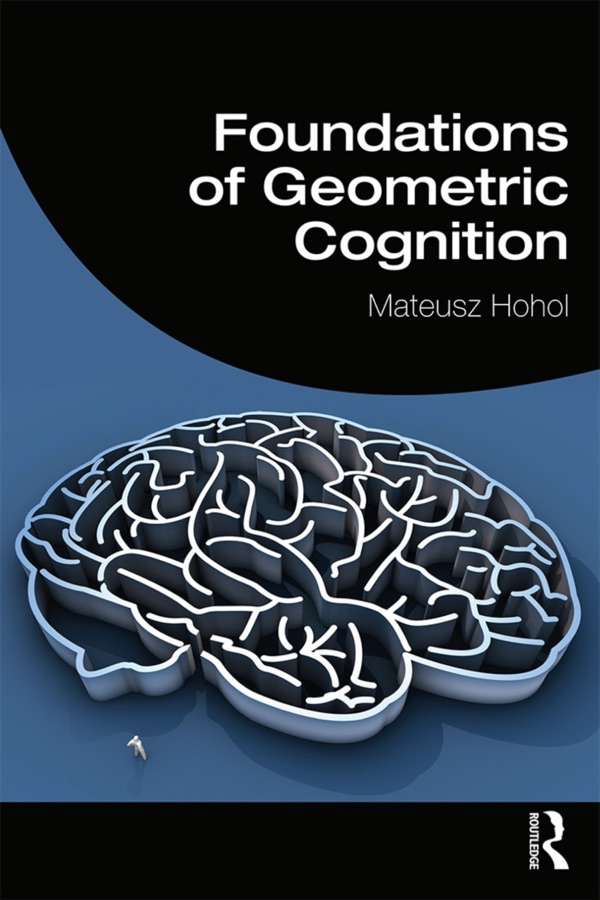
Hohol, M. (2020). Foundations of geometric cognition. Routledge. https://doi.org/10.4324/9780429056291 PDF
Miłkowski, M., Hohol, M., & Nowakowski, P. (2019). Mechanisms in psychology: The road towards unity? Theory & Psychology, 29(5), 567–578. https://doi.org/10.1177/0959354319875218 PDF
Hohol, M., & Miłkowski, M. (2019). Cognitive artifacts for geometric reasoning. Foundations of Science, 24(4), 657–680. https://doi.org/10.1007/s10699-019-09603-w PDF
Miłkowski, M., Hensel, W. M., & Hohol, M. (2018). Replicability or reproducibility? On the replication crisis in computational neuroscience and sharing only relevant detail. Journal of Computational Neuroscience, 45(3), 163–172. https://doi.org/10.1007/s10827-018-0702-z PDF
Hohol, M., Wołoszyn, K., Nuerk, H.-C., & Cipora, K. (2018). A large-scale survey on finger counting routines, their temporal stability and flexibility in educated adults. PeerJ, 6, Article e5878. https://doi.org/10.7717/peerj.5878 PDF
Miłkowski, M., Clowes, R. W., Rucińska, Z., Przegalińska, A., Zawidzki, T., Gies, A., Krueger, J., McGann, M., Afeltowicz, Ł., Wachowski, W. M., Stjernberg, F., Loughlin, V., & Hohol, M. (2018). From wide cognition to mechanisms: A silent revolution. Frontiers in Psychology, 9, Article 2393. https://doi.org/10.3389/fpsyg.2018.02393 PDF
Hohol, M. (2018). Biopsychologiczne podstawy poznania geometrycznego. Zagadnienia Filozoficzne w Nauce, 64, 137–165. PDF
Hohol, M. (2018). Podstawy neuronauki poznawczej. W: B. Brożek, Ł. Kurek, J. Stelmach (red.), Prawo i nauki kognitywne (13–36), Wolters Kluwer. PDF
Hohol, M. (2018). Od przestrzeni do abstrakcyjnych pojęć: W stronę teorii poznania geometrycznego. W: R. Murawski, J. Woleński (red.), Problemy filozofii matematyki i informatyki (129–143), Wydawnictwo Uniwersytetu Adama Mickiewicza. PDF
Hohol, M., Baran, B., Krzyżowski, M., & Francikowski, J. (2017). Does spatial navigation have a blind-spot? Visiocentrism is not enough to explain the navigational behavior comprehensively. Frontiers in Behavioral Neuroscience, 11, Article 154. https://doi.org/10.3389/fnbeh.2017.00154 PDF
Wołoszyn, K., & Hohol, M. (2017). Commentary: The poverty of embodied cognition. Frontiers in Psychology, 8, Article 845. https://doi.org/10.3389/fpsyg.2017.00845 PDF
Hohol, M., Cipora, K., Willmes, K., & Nuerk, H.-C. (2017). Bringing back the balance: Domain-general processes are also important in numerical cognition. Frontiers in Psychology, 8, Article 499. https://doi.org/10.3389/fpsyg.2017.00499 PDF
Cipora, K., Hohol, M., Nuerk, H.-C., Willmes, K., Brożek, B., Kucharzyk, B., & Nęcka, E. (2016). Professional mathematicians differ from controls in their spatial-numerical associations. Psychological Research, 80, 710–726. https://doi.org/10.1007/s00426-015-0677-6 PDF
Hohol, M., & Furman, M. (2016). On explanation in neuroscience: The mechanistic framework. W: M. Heller, B. Brożek, & M. Hohol (Red.), The concept of explanation (ss. 207–235). Copernicus Center Press. PDF
Heller, M., Brożek, B., Hohol, M. (red.) (2016). The concept of explanation. Copernicus Center Press. Link
Brożek, B., Hohol, M. (2015). Language as a tool: An insight from cognitive science. Studia Humana, 4(2), 16–25. https://doi.org/10.1515/sh-2015-0013 PDF
Szczygieł, M., Cipora, K., Hohol, M. (2015). Liczenie na palcach w ontogenezie i jego znaczenie dla rozwoju kompetencji matematycznych. Psychologia Rozwojowa, 20(3), 23–33. https://doi.org/10.4467/20843879PR.15.014.3803 PDF
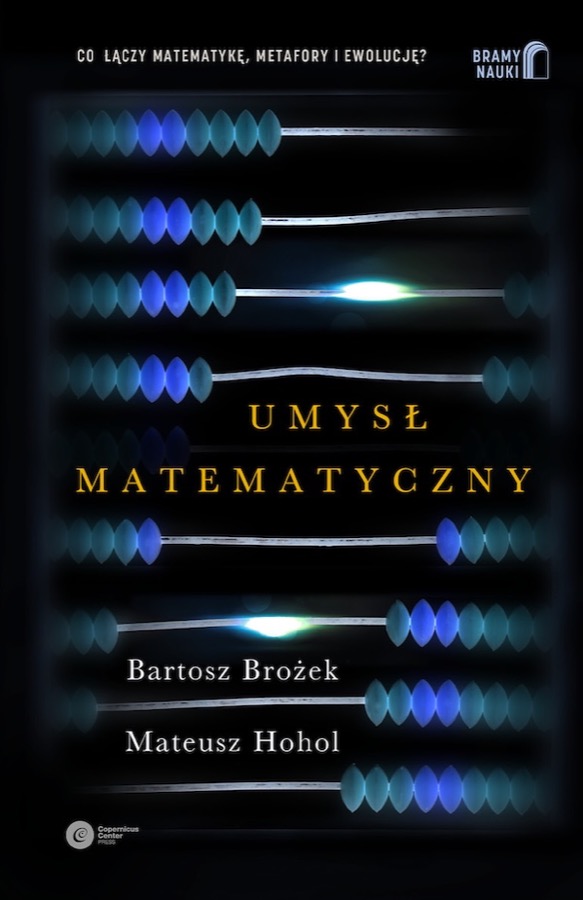
Brożek, B., Hohol, M. (2014). Umysł matematyczny. Copernicus Center Press (wydanie drugie: 2016, wydanie trzecie poprawione: 2017). Link
Cipora, K., Szczygieł, M., Hohol, M. (2014). Palce, które liczą: znaczenie liczenia na palcach dla poznania matematycznego u człowieka dorosłego. Psychologia–Etologia–Genetyka, 30, 59–73. PDF
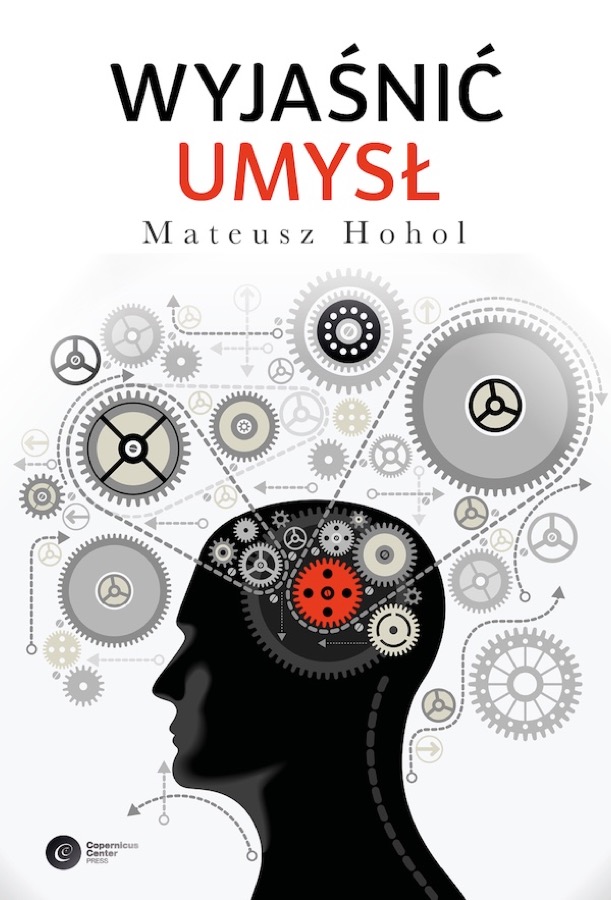
Hohol, M. (2013). Wyjaśnić umysł: Struktura teorii neurokognitywnych. Copernicus Center Press (drugie wydanie poprawione: 2017). Link
Stelmach, J., Brożek, B., Hohol, M. (red.) (2013). The many faces of normativity. Copernicus Center Press. Link